
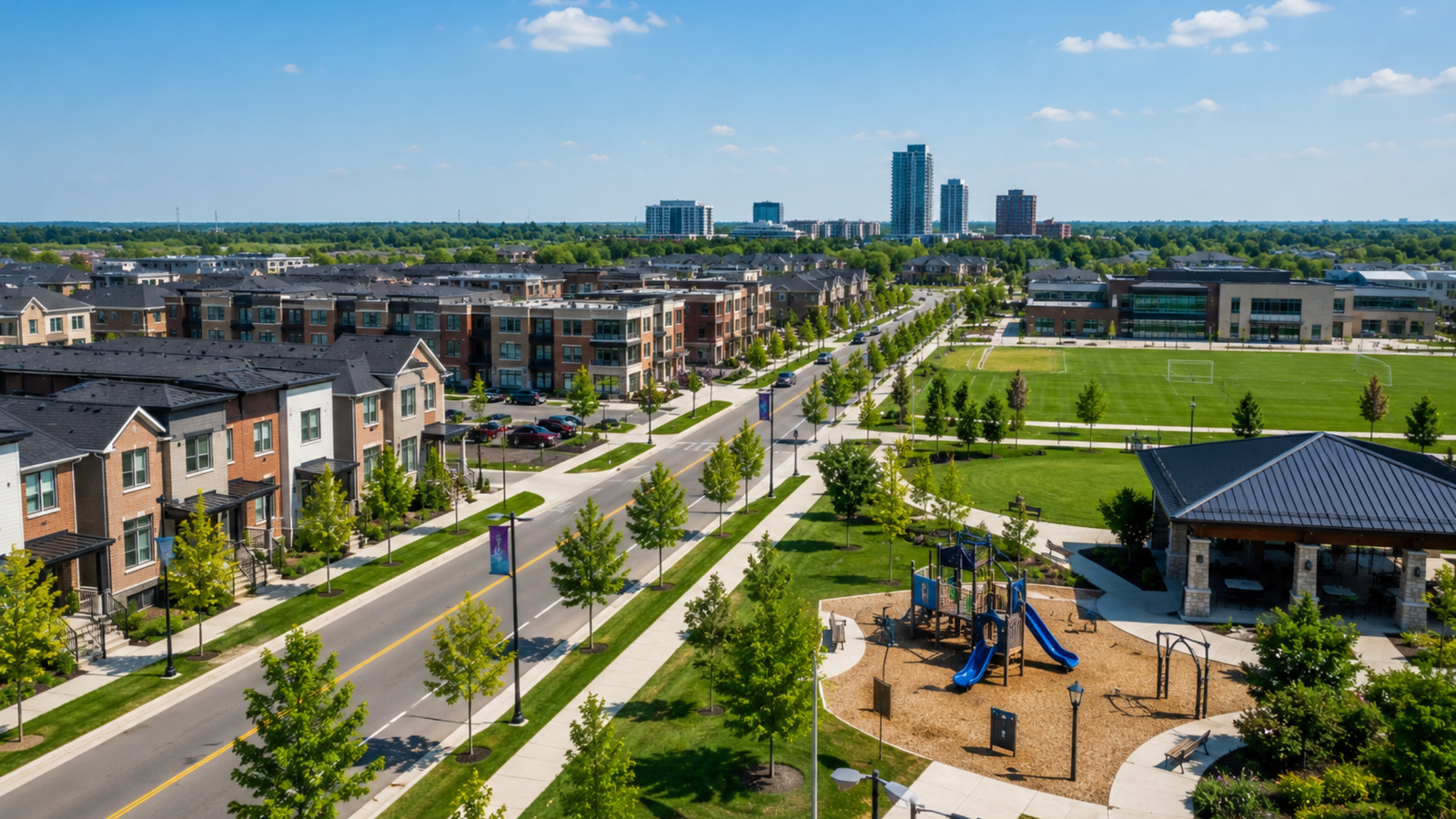
Cities continue to evolve as their populations grow, creating new opportunities and new challenges for urban development. Today, future growth depends on more than simply building additional homes. It requires neighbourhoods that bring together housing, transportation, education, recreation, and essential amenities to support residents throughout different stages of life.
Oshawa has become one of Durham Region’s fastest-growing residential destinations, with new communities helping shape the city’s future. As Oshawa Future Growth continues to be supported by thoughtfully planned neighbourhoods and expanding infrastructure, residents can enjoy greater convenience, stronger connectivity, and a better quality of life. Understanding how these infrastructure development communities contribute to Oshawa’s future growth offers valuable insight for today’s homebuyers.
Why Community Planning Is Becoming More Important in Growing Cities
Oshawa’s approach to community development is guided by official municipal policies outlined in the City of Oshawa Planning and Development resources. These policies provide a long-term blueprint for residential growth, infrastructure planning, and neighbourhood design. By referencing the Oshawa Official Plan, residents and prospective buyers can see that planned neighbourhoods are not just marketing terms — they are built according to carefully considered guidelines that ensure sustainable growth, connectivity, and access to essential amenities. This ensures that infrastructure development communities support both current needs and future expansion in a structured and reliable way.
With urban expansion comes the need for proper planning of communities. This means simply building homes is not enough anymore to satisfy the needs of contemporary people who desire communities which will make their lives easier through provision of schools, parks, retail, healthcare facilities, and transport.
For instance, a family whose size is increasing would prefer residing in a community that allows their kids to get education near home without spending too much time traveling while providing them with some parks to visit on weekends. Professionals would also like such communities which allow them quick access to highways but do not disrupt their residential peace.
How Planned Neighbourhoods Are Strengthening Oshawa’s Future
Infrastructure development communities contribute to Oshawa’s growth by supporting both current and future needs. Several factors help explain why these neighbourhoods continue to attract buyers.
Supporting Population Growth with Diverse Housing Choices
As Oshawa welcomes new residents, a variety of housing options helps accommodate changing lifestyles and household sizes. Infrastructure development communities that include townhomes, semi-detached homes, and detached homes provide greater flexibility for buyers at different stages of life.
Whether someone is purchasing a first home, moving into a larger property for a growing family, or looking for a home that better suits changing needs, diverse housing options make it easier to remain within the same city over time.
Designed for Convenient Everyday Living
Thoughtfully planned communities make access to key amenities easy by putting them within walking distance of where residents live.
Some of these amenities are:
- Shopping centers
- Grocery stores
- Restaurant and coffee shops
- Medical clinics
- Community centers
- Amenities for everyday use all throughout the week
With these facilities close at hand, residents get more time to enjoy their community than running around from place to place.
Improving Connectivity Across the Region
Transportation plays an important role in supporting both economic growth and everyday convenience. Pre construction homes Oshawa benefits from a transportation network that helps residents remain connected across Durham Region and the Greater Toronto Area.
Important transportation links include:
- Highway 401 for regional travel
- Highway 407 for efficient commuting
- GO Transit services connecting to Toronto
- Local transit supporting travel throughout the city
These connections provide greater flexibility for commuters while making the city attractive to professionals who work throughout the region.
Preserving Green Spaces While Supporting Growth
Urban growth does not have to come at the expense of outdoor living. Many newer communities incorporate parks, trails, and open spaces that encourage healthier and more active lifestyles.
Green spaces provide opportunities for walking, cycling, family gatherings, and recreational activities while also contributing to the overall appearance and character of neighbourhoods. These features help create infrastructure development communities where residents can enjoy both urban convenience and access to nature.
Strengthening Communities Through Education and Local Services
Communities need something other than houses to be strong. Education and community services give people an opportunity to connect with others in the city.
Some examples are:
- Public schools
- Catholic schools
- Ontario Tech University
- Durham College
- Medical centers and health care facilities
This list is just part of what makes up a community that is interesting for the long run, while making sure people get their needs met right there in their neighborhood.
What Buyers Should Look for in a Growing Urban Community
Buying a home is much more complicated than just the physical property. Other considerations should be taken into account for the community that surrounds the home.
These considerations may include:
- Proximity to education facilities and medical care
- Places for buying goods and eating out
- Green space and opportunities for recreation
- Public transit network
- Walkability and good community design
- Housing variety to cater for future needs
Communities that have all of the above tend to be more valuable in the long term because they keep helping their residents even when their life changes. Going beyond the house itself helps homebuyers make a better decision.
Building Communities That Support Tomorrow’s Lifestyle
New communities have been contributing positively to Oshawa’s ongoing expansion through building neighborhoods that strike a balance between housing, infrastructure, accessibility, and convenience. The infrastructure development in communities is not just about the construction of homes but are geared towards supporting the way of life for the people.
As Oshawa expands further, well-planned neighborhoods will continue to be an essential element of the future of the city. Buyers looking for a new home will find Harmony District representative of what new communities have to offer today in terms of variety in housing choices, amenities, convenient transportation, schools, parks, and a well-connected North Oshawa area. Choosing a community built around these priorities can help support both present-day living and long-term lifestyle goals.